Creating Garden Microclimates to Grow Borderline-Hardy Plants
Connecticut gardeners sometimes find that a plant survives in one part of a yard but struggles a few steps away. The difference may be a sheltered wall, a cold-air pocket, or soil that stays wet in winter. This guide shows how to spot and shape those small climate differences, then use them to give borderline-hardy plants a better chance.
Why microclimates matter for borderline-hardy plants
A microclimate is a small area whose conditions differ from the broader climate around it. In a garden, the difference might come from sunlight, wind exposure, slope, nearby pavement, shade, soil moisture, or a building that releases stored heat after sunset. A yard can contain several such pockets, even when it is small.
For a plant near the edge of its hardiness, those details can influence whether it survives winter, flowers reliably, or gets damaged by a late cold snap. A warmer nook may reduce exposure to harsh wind, while a low spot may collect cold air. A sunny wall can warm a planting area during the day, but it can also encourage early growth that is vulnerable to a later freeze.
“Borderline-hardy” is a relative term. A plant is borderline-hardy when its winter survival is uncertain at a particular site. That uncertainty may come from the plant’s cold tolerance, the garden’s exposure, or both. The same species can be dependable in a sheltered location and unreliable in an exposed one.
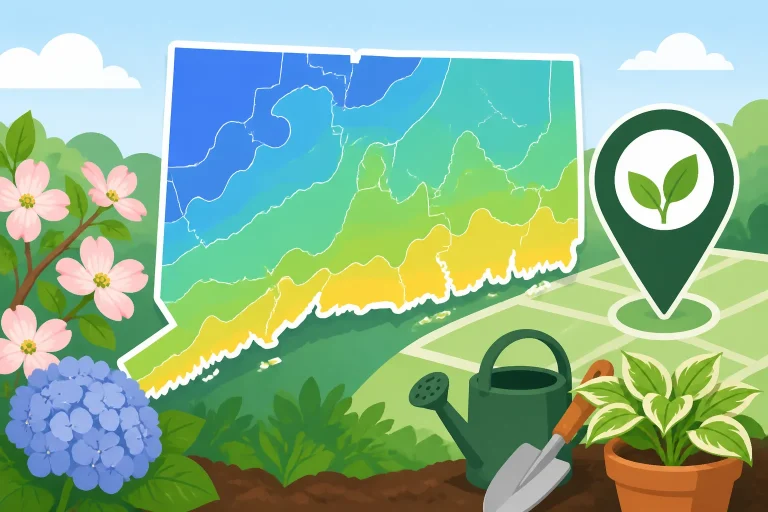
The USDA Plant Hardiness Zone Map is useful for comparing the average annual extreme winter temperatures of different areas. It does not describe every condition that affects a plant. A zone cannot tell you whether a bed stays waterlogged, how much winter wind reaches it, or whether a warm wall triggers early growth. Nor does a sheltered garden nook change the zone assigned to an area on the map. Use the map as one screening tool, then assess the planting spot itself. USDA Hardiness Zones Across Connecticut: Checking Your Local ZIP
In Connecticut, gardeners may also be comparing very different settings: a wind-exposed yard, a sheltered urban garden, a sloping site, or a low area where cold air settles. A broad location gives useful context, but the conditions right beside a plant can explain why it fares better or worse than expected. Connecticut Planting Zones: How Location Shifts Transplant Timing
Think of microclimate planning as risk management, not a guarantee. A warmer pocket can improve the odds for a borderline plant, but it cannot eliminate extreme cold, winter wetness, ice, wind, or an unexpected temperature swing. The goal is to match the plant to the best available spot, reduce avoidable stress, and decide in advance how much protection and replacement risk you are willing to accept.
Read your yard before choosing a planting spot
Start by observing the site rather than assuming that a south-facing wall or sunny patio is automatically the best place. A spot may be warm in the afternoon but exposed to wind at night. A sunny bed may drain poorly. A low corner may look sheltered yet collect cold air and water. Microclimate planning works best when several conditions are considered together.
Track sun and shade
Note when direct sunlight reaches the site and when it leaves. Morning sun can dry dew and warm a plant gradually. Afternoon sun may provide more heat, but it can also intensify summer stress. Shade from a building, fence, or evergreen changes as the sun moves; a spot that seems bright during one brief visit may be shaded for much of the day.
Observe the site across the growing season if possible. Deciduous trees allow more sunlight through before leaf-out and after leaves fall, while evergreen trees and structures can shade the same bed year-round. In winter, low sun angles and long shadows may make a location very different from what it is in midsummer.
Make a simple sketch of the yard and mark sunny, partly shaded, and shaded areas. You do not need a precise instrument to begin. Repeated observations at different times of day are more useful than a single estimate. For more help assessing light, see Determining Full Sun Hours for Connecticut Vegetable Beds.
Notice wind, slope, and low spots
Wind can dry leaves and soil, damage stems, and make cold conditions harder on exposed plants. A hedge, fence, or building may reduce wind, but it may also create turbulence around corners or channel gusts through a narrow passage. Watch what happens during windy weather rather than assuming that a barrier blocks airflow everywhere behind it.
Slope affects how air and water move. Cold, dense air tends to flow downhill and collect in low places, much like water. A hollow or enclosed low spot may therefore be colder than a nearby slope. The middle or upper portion of a slope can sometimes be more favorable for a cold-sensitive plant, provided it is not excessively exposed to wind and does not dry out.
After rain or snowmelt, look for standing water, slow drainage, and spots that remain damp while the rest of the garden dries. These observations matter because many plants tolerate cold better when their roots are not sitting in saturated soil. A plant that seems to suffer from winter cold may actually be weakened by waterlogged roots, or by both cold and wetness together.
Look for hard surfaces and sheltered structures
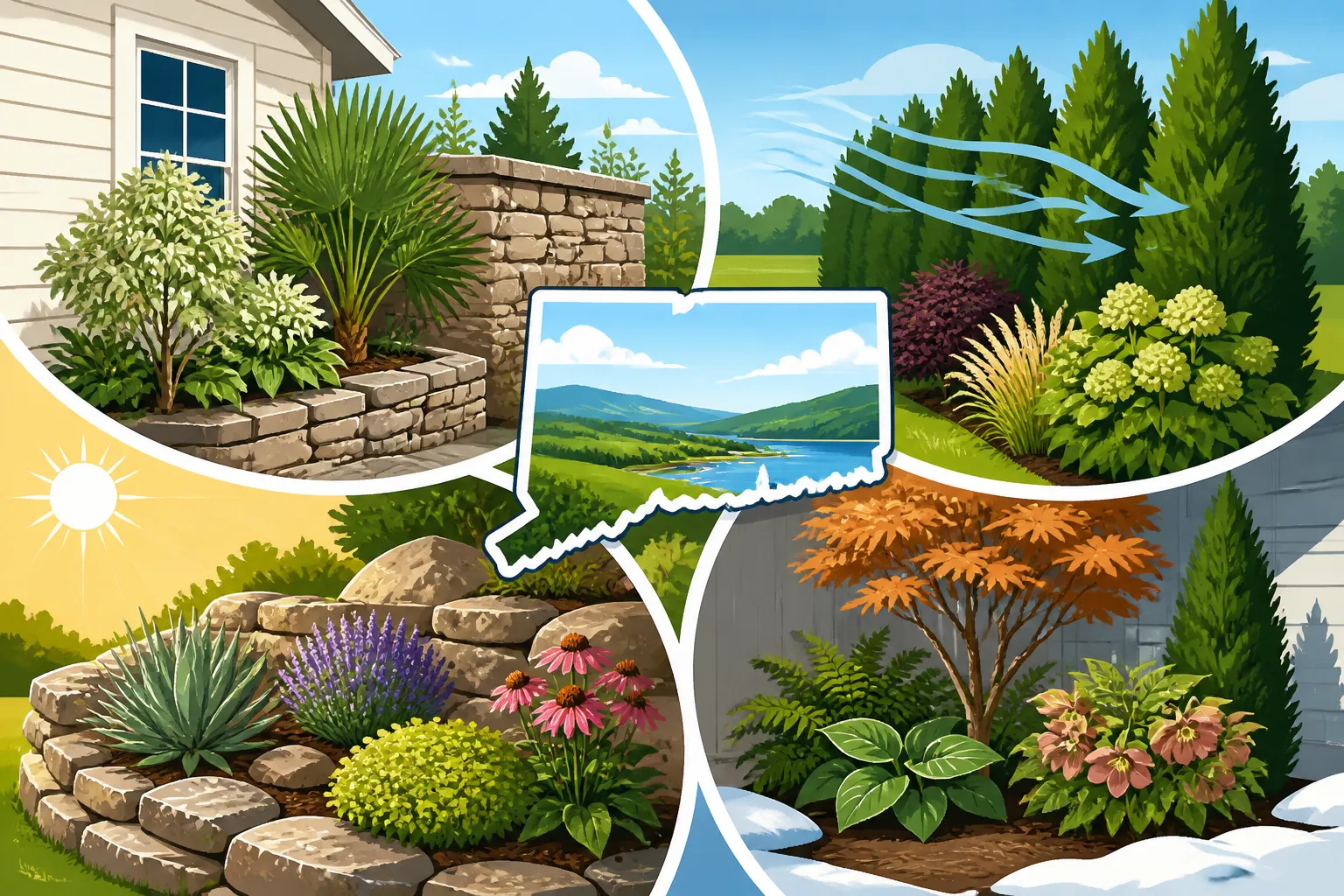
Walls, foundations, patios, driveways, and stonework can absorb heat during the day and release some of it later. A sheltered bed near a structure may also receive less wind. Those effects can create a warmer-feeling pocket, but the benefits are not uniform: exposure, wall material, shade, and distance from the surface all matter.
The same structures can create drawbacks. A roof overhang may keep rain and snow from reaching the soil, leaving roots too dry. A downspout can send too much water into one spot. Reflected sunlight can make a bed hot in summer, and a wall can limit air circulation. Look at the whole setting, not just the fact that it is close to a building.
The most useful first step is to keep a short site log. Record where snow melts first and last, where frost seems to linger, where wind is strongest, and which areas stay wet after rain. Over time, that record helps you separate a genuinely favorable planting pocket from one that merely feels warm on a mild afternoon.
| Garden feature | Potential advantage | Possible drawback | What to observe |
|---|---|---|---|
| Sheltered wall | Less wind and some stored daytime heat | Early growth, reflected heat, or dry soil under an overhang | Winter wind, summer heat, and soil moisture |
| Low area | Protection from some winds | Cold-air and water accumulation | Frost lingering, puddles, and slow drying |
| Slope | Better movement of cold air and water | Exposure or faster drying | Wind direction and soil moisture |
| Evergreen hedge | Wind reduction and some winter screening | Shade, root competition, or trapped dampness | Light, airflow, and nearby plant growth |
| Patio or pavement edge | Stored heat and a warm surface | Heat stress, reflected light, and limited rooting space | Summer temperature and root-zone conditions |
| Open sunny bed | Strong light and quicker surface warming | Wind exposure and rapid drying | Sun duration, gusts, and irrigation needs |
Create a warmer, more stable planting pocket
Once you have identified a suitable area, you can make modest changes to improve its conditions. The most reliable improvements reduce a specific stress: strong wind, poor drainage, or excessive exposure. Trying to create a warm pocket without considering summer heat, airflow, and water can trade one problem for another.
Use shelter without sealing the site
A fence, hedge, or nearby structure can reduce wind, but a completely enclosed area may have poor airflow or uneven temperatures. Aim for a sheltered site that still allows air to move. Good air circulation helps foliage dry and can reduce the damp conditions that encourage some plant problems.
When a wind barrier is practical, consider what direction the harshest winds approach from and whether the barrier creates a narrow wind tunnel elsewhere. A solid wall may redirect gusts over or around its edges. A more permeable screen can reduce wind while allowing some air to pass through. The right choice depends on the yard and the plants; test the effect before investing in a major change.
Keep in mind that wind protection does not necessarily prevent frost. A barrier can make a site feel more comfortable to people while cold air still settles nearby. Evaluate the area over more than one season, especially if the plant’s survival depends on conditions during the coldest part of the year.
Improve drainage before adding warmth
Good drainage is one of the most useful forms of winter protection. Roots in saturated soil can be vulnerable to damage and may be slow to recover. Before planting a borderline-hardy specimen, check how the area behaves after heavy rain and snowmelt. If water stands or the soil remains soggy, select a better-drained location or address the drainage problem first.
A raised bed or planting mound can help lift roots above wet soil, but the soil mix, bed edges, and surrounding grade still matter. A raised bed can dry faster in summer and may experience wider temperature swings than in-ground soil. Plan how the site will be watered during dry periods, and do not assume that raising the planting surface alone solves every drainage issue.
Avoid directing roof runoff toward the plant. If an overhang excludes rainfall, check soil moisture rather than relying on nearby rainfall to water the root zone. The aim is soil that drains freely without leaving the plant chronically dry.
If you are unsure whether the soil is suitable, check its texture and drainage before changing it. Managing Garden Soil Fertility and Health Across Connecticut covers broader soil considerations, while Testing Garden Soil in Connecticut Before Adding Lime or Amendments can help you decide whether a soil test is relevant. Avoid adding amendments simply because a plant is described as needing a particular soil condition; first establish what your site actually has.
Make small changes and reassess
A microclimate is shaped by several interacting features. Adding a dense screen might cut wind but also reduce winter sun. Removing a branch may brighten a bed but expose it to more wind. A light-colored surface may reflect heat and light, while a dark hard surface may store warmth but increase summer heat near the roots.
Make changes one at a time where possible. Then observe whether the site is actually improving for the plant. If you add a wind screen, check for stagnant, damp air. If you move a plant closer to a wall, check that its root zone still receives water. If you raise a bed, watch for faster drying.
There is no need to engineer every yard. Often the best solution is to plant a borderline species in a naturally sheltered, well-drained nook rather than trying to remodel a difficult site. If the available area remains exposed, wet, or otherwise unsuitable, a more cold-tolerant plant may be the more dependable choice.
Manage winter risks and seasonal transitions
The hardest conditions for a borderline-hardy plant may not be the coldest night alone. Wind, wet soil, repeated freezing and thawing, and early growth can combine to cause injury. A useful protection plan addresses the particular risks at the site and does not assume that a single cover or warm wall solves them all.
Protect roots and soil moisture
Roots often experience less temperature fluctuation when they are surrounded by garden soil than when they are in a small container. A layer of mulch can help moderate soil temperature and reduce rapid changes, but it should not be piled tightly against stems or trunks. Keep the plant’s crown and lower stems from being smothered, and make sure the mulch does not trap excess moisture against vulnerable growth.
Mulch is not a substitute for drainage. In a wet site, adding material that holds moisture may make conditions worse. Choose a mulch appropriate for the bed and use it to moderate the soil rather than to bury the plant.
Dry soil can also stress plants, particularly evergreens that continue to lose moisture through their foliage. Check soil conditions before winter rather than assuming that cool weather means roots no longer need water. At the same time, avoid leaving the root zone saturated. The right approach depends on rainfall, soil, exposure, and plant needs.
Use temporary covers thoughtfully
A temporary cover can reduce exposure during a cold spell, but the material and method matter. A cover that touches foliage may not provide the same protection as one supported above the plant. A cover can also trap heat, restrict air movement, or create moisture problems if left in place when conditions warm.
Before using a cover, identify what you are trying to protect: foliage, flowers, a graft, or the root zone. Secure it so wind cannot dislodge it, and remove or adjust it when conditions change. Do not assume that a cover will make an unsuitable site safe through every winter event. Follow the plant-care guidance and product instructions for any specific protection material you use.
For small plants, a temporary cover can be part of a broader plan, but it should not be the only plan if the plant is poorly matched to the site. For larger specimens, choose the planting location with mature size and the ability to protect the plant in mind. A cover that is easy to use on a small plant may be impractical once the plant has grown.
Avoid encouraging vulnerable early growth
A warm wall or sunny pocket can encourage a plant to resume growth earlier than it would in a more exposed location. New leaves and shoots may be less tolerant of a later cold event than dormant growth. This is one reason a warm microclimate can both help and hurt.
Do not choose a site based only on how quickly it warms in spring. Consider the chance of cold conditions returning and whether the plant tends to break dormancy early. Avoid unnecessary disturbance or pruning that stimulates tender new growth at a risky time. For plants with specific pruning needs, rely on guidance for that plant rather than applying a general schedule.
Frost timing is variable, not a fixed date on the calendar. Local patterns and conditions at your property matter, and a sheltered location does not remove all risk. Use local forecasts alongside your own observations. How Connecticut Microclimates Shift Your Spring Planting Dates explains why nearby sites can respond differently to the same seasonal weather.
Decide how much protection you can maintain
Some plants need little attention after establishment; others require repeated winter protection or close monitoring. Be realistic about the time and materials you are willing to provide. A plant that survives only when covered carefully every winter may not suit a low-maintenance bed.
A useful plan includes a backup option. You might grow a tender specimen in a container so it can be moved to a protected location, or plant a less vulnerable substitute nearby. Container growing can make protection easier, but pots expose roots to more temperature change and can dry out or become waterlogged. A container is flexible, not automatically safer.
When choosing a borderline plant, ask three questions: What conditions are most likely to injure it here? Can the site be improved without creating another problem? What will you do if a severe winter damages it? Those answers are more practical than relying on a zone label alone.
Match the plant to the microclimate and its limitations
Microclimate planning is most successful when it begins with the plant’s needs. Before choosing a planting spot, find out whether the plant’s main vulnerability is winter cold, winter wetness, wind, early spring growth, or a combination. A sheltered site helps only if it addresses the actual source of stress.
Treat plant labels as a starting point
Labels and reference descriptions can help screen plants, but they cannot predict every garden outcome. Check the plant’s stated cold tolerance, mature size, light needs, water preferences, and drainage requirements. If the plant is described as marginal in your area, look for reliable local guidance and consider whether its most demanding needs can be met at your site.
Do not assume that a plant will thrive simply because it survives winter. It may live but flower poorly, suffer repeated dieback, or need more care than expected. Decide whether your goal is survival, healthy growth, or dependable flowering and fruiting. Those are different standards.
The word “hardy” also does not mean a plant is protected against every type of winter injury. A plant may tolerate cold but struggle with saturated soil, winter sun, drying wind, or fluctuating temperatures. A good site has to match more than one number on a label.
Consider containers for flexible placement
A container lets you place a plant in a favorable spot during the growing season and move it when protection is needed. It can also make drainage easier to manage. However, container roots are more exposed to temperature swings than roots in the ground, and containers can dry quickly in warm weather. They need a suitable size, drainage, and a plan for winter placement.
If you plan to move a container, make sure the mature plant and pot will remain manageable. A heavy pot that cannot be shifted when conditions turn difficult may not offer much practical flexibility. A sheltered garage or other protected area may be useful for some plants, but the plant’s light, moisture, and temperature needs still apply.
For guidance on container choices and root space, see Choosing Pot and Container Sizes for Connecticut Vegetables. Although that topic focuses on vegetables, the general considerations of container volume, drainage, and placement are useful when planning any potted plant.
Evaluate a plant over several seasons
One mild winter does not prove that a location is reliably safe. Likewise, damage after one unusually difficult winter does not necessarily mean the microclimate is always unsuitable. Record winter conditions and the plant’s response over time. Note where damage appears, whether the plant recovers, and whether problems follow wet periods, wind exposure, or early growth.
If a plant is repeatedly injured, look for a pattern before making changes. Damage concentrated on the windward side points toward exposure. Decline associated with persistently wet soil suggests drainage may be a concern. A plant that begins growing early and then loses new shoots may be responding to a warm pocket followed by a cold spell.
When a plant fails, do not automatically add more protection. Reassess whether it is matched to the site at all. A different location, better drainage, a container, or a more cold-tolerant plant may be a better long-term choice than adding layers of protection each season.
A practical process for choosing and testing a site
A simple, repeatable process helps turn observation into a planting decision. It also prevents the common mistake of selecting a plant first and then trying to force it to fit a difficult corner of the yard.
-
Choose a plant with a known concern. Identify why it is considered borderline for your site: cold, wind, wet soil, early growth, or another limitation. If you cannot identify the likely stress, gather more information before planting.
-
Map the candidate locations. Mark sun and shade, slopes, low spots, walls, paved surfaces, hedges, and exposed edges. Include areas that are easy to overlook, such as the sheltered side of a shed or a bed that sits above a damp lawn.
-
Observe conditions over time. Check the candidate sites in different weather and seasons. Pay attention to wind, standing water, snowmelt, shade, and how quickly the ground dries. A few observations are more useful than choosing a site based on appearance alone.
-
Check the soil and drainage. Look for water that lingers after rain and identify areas that dry unusually fast. If soil is part of the problem, address the actual issue before planting instead of making a broad, untested change.
-
Choose the site that solves the main risk. If the plant is vulnerable to wind, prioritize shelter. If wet roots are the concern, prioritize drainage. If the plant needs warmth, look for a sunny, protected location without excessive reflected heat or early-season risk.
-
Plant with room for the mature specimen. Account for shade, airflow, roots, and maintenance access as the plant grows. A microclimate that works for a small plant may change when branches touch a wall or a hedge becomes dense.
-
Monitor and adjust. Record what happens through the first seasons. If the plant struggles, diagnose the pattern before changing the site. Add protection only when it targets a specific problem and can be managed safely.
This process is useful whether you are planting in a large landscape or a small urban yard. It also helps set expectations. A protected site may extend the range of plants you can try, but the most dependable garden still relies on plants suited to the conditions that are actually present.
Common microclimate mistakes to avoid
Assuming a warmer spot is always better
Warmth can help a cold-sensitive plant, but an especially warm pocket may encourage early growth or expose leaves to reflected heat. A site beside pavement may become stressful in summer. Weigh winter shelter against summer conditions and seasonal timing rather than ranking spots by warmth alone.
Planting in a low, enclosed corner
A corner can look protected from wind, yet low ground may collect cold air and water. A wall or fence may also limit airflow. Observe whether frost or moisture lingers there, and compare it with a slightly raised or more open location before committing to a vulnerable plant.
Ignoring water under an overhang
A sheltered wall may keep snow and rainfall off a bed. Roots can become dry even when the surrounding garden is moist. Check the actual soil and water the root zone when needed, while keeping drainage in mind. Do not judge moisture by how wet nearby ground looks.
Treating a hardiness zone as a guarantee
A zone is a regional reference, not a forecast for a particular winter or a guarantee of performance in a specific bed. A plant listed as suitable may still fail in a windy, wet, exposed yard. Conversely, a protected pocket may improve the odds for a plant that is otherwise marginal. Local conditions remain part of the decision.
Making several site changes at once
If you add a screen, change the soil, and move the plant all at once, it becomes difficult to tell what helped. Make targeted changes and observe the results. This is especially important when a plant has more than one possible stress, such as wet soil and wind exposure.
Overlooking the cost of ongoing care
Extra protection can mean more work each season, and some plants may need attention at precisely the time weather is unpredictable. Consider maintenance before planting. If a plant’s success depends on a routine you are unlikely to maintain, select a more reliable option or grow it in a movable container.
A microclimate is an advantage only when it fits the plant and the gardener’s ability to care for it. The best location is not necessarily the warmest corner. It is the place where light, shelter, drainage, and seasonal conditions align with the plant’s needs.
Frequently Asked Questions
Can a microclimate change the hardiness zone of my yard?
No. A sheltered pocket may experience different conditions from the surrounding area, but it does not change the zone assigned to that area on the USDA Plant Hardiness Zone Map. Use the zone as a broad reference and assess the planting site separately.
Is a south-facing wall always the best place for a borderline-hardy plant?
Not always. It may provide shelter or stored daytime heat, but it can also encourage early growth, reflect summer heat, or leave soil dry beneath an overhang. Check the plant’s needs and observe the site through more than one season.
Does mulch make a borderline-hardy plant winterproof?
No. Mulch can help moderate soil conditions, but it cannot guarantee survival or solve poor drainage, wind exposure, or unsuitable plant selection. Use mulch appropriately, keep it away from stems and crowns, and consider the whole site.
Are containers safer for plants that are marginally hardy?
They offer placement flexibility, but container roots are exposed to greater temperature changes than roots in the ground. Pots can also dry quickly or become waterlogged. Container growing can help when you have a realistic plan for watering, drainage, and winter protection.
How long should I observe a site before planting?
There is no single observation period that suits every plant and yard. At minimum, check sun, wind, drainage, and moisture in different conditions rather than relying on one visit. For a highly vulnerable plant, observations across changing seasons provide a more useful picture.
Disclaimer
This article is for general informational purposes only and does not constitute professional advice. Laws, prices and regulations vary by location and change over time. Consult a qualified professional for guidance on your specific situation. Connecticut Gardening Guide is not a government agency and is not affiliated with any university extension, state department of agriculture or other government agency.