USDA Hardiness Zones Across Connecticut: Checking Your Local ZIP
A ZIP code can point you toward a Connecticut hardiness zone, but it cannot tell you exactly what will thrive in every yard. The map is useful for comparing winter cold tolerance, not for setting every planting date. Here’s how to check your location, interpret the result, and combine it with local conditions for more dependable garden decisions.
What a Connecticut hardiness zone tells you
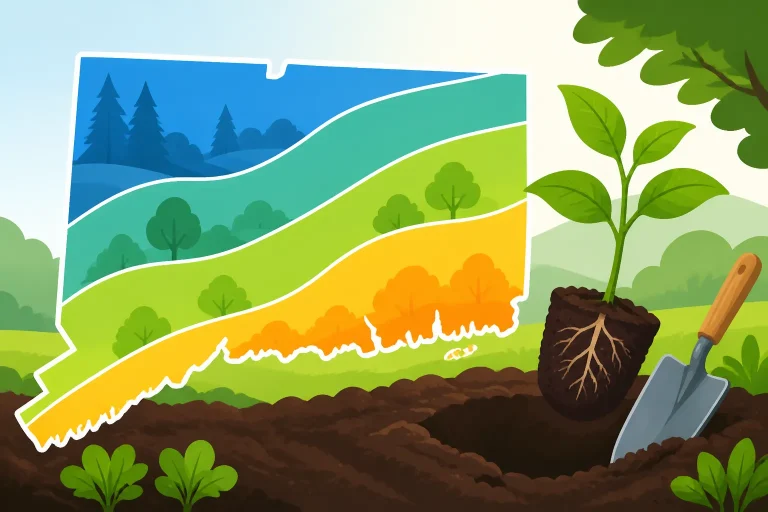
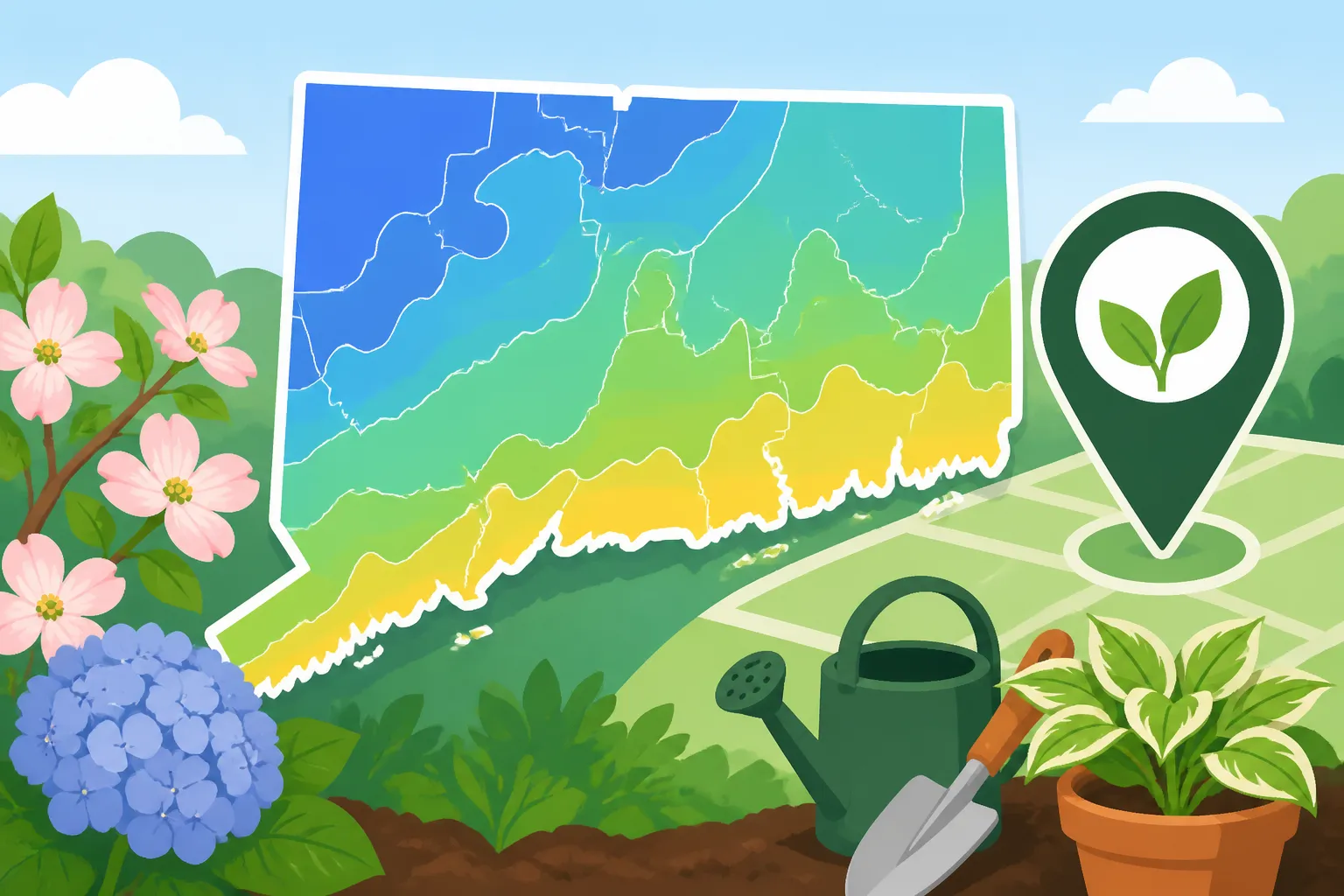
The USDA Plant Hardiness Zone Map groups locations by their average annual extreme minimum winter temperature over a 30-year period. Each zone represents a band of temperatures, and the letter subdivisions—“a” and “b”—identify smaller divisions within a numbered zone. A lower zone is colder than a higher one.
In Connecticut gardening discussions, you may encounter zone labels such as 6a, 6b, and 7a. These labels describe the map’s estimate of winter cold for a location. They are most useful when you are choosing long-lived plants, such as trees, shrubs, and perennials, that must survive outdoors from year to year.
A hardiness zone is not a prediction of the lowest temperature your yard will experience in any particular winter. It is also not a guarantee that a plant will survive. A severe cold spell can fall outside the map’s average, and a plant rated for a location may still struggle because of wind, wet soil, poor drainage, winter sun, or other stress.
Think of the zone as one screening tool:
- If a plant’s listed hardiness is compatible with your location, it may be a reasonable candidate for winter survival.
- If the plant is rated for warmer conditions than your location, it may be vulnerable to winter injury or loss.
- If the plant is rated for colder conditions, it may be capable of surviving your winter, but it still needs suitable light, moisture, soil, and care.
The zone does not describe summer heat, the length of the frost-free growing season, or the date when soil becomes suitable for a particular crop. Those questions require other information. For example, annual vegetables usually depend more on soil temperature, frost risk, and days to maturity than on a perennial hardiness rating. For those decisions, see When to Plant Vegetables Outdoors in Connecticut and Connecticut Indoor Seed Starting and Outdoor Vegetable Sowing Dates.
A location’s zone is also not a score of how good it is for gardening. A colder zone does not mean that vegetables cannot grow there, and a warmer zone does not guarantee a longer or easier growing season. Connecticut gardeners can grow many of the same crops in different zones by adjusting timing, choosing suitable varieties, and responding to the weather.
How to check the zone for your ZIP code
A ZIP code is a practical starting point, but the map is more informative when you examine the actual location within it. ZIP code boundaries are designed for mail delivery, not for measuring climate. One ZIP code can include neighborhoods at different elevations or with different exposure to wind, water, and cold air.
Use the USDA Plant Hardiness Zone Map to look up the location where you garden. If the map offers a location search, enter your ZIP code and then zoom in. Do not stop at the first result if the map shows a broader area. Move the map to the garden’s approximate location and inspect the zone shading around it.
A careful lookup can follow these steps:
- Open the USDA Plant Hardiness Zone Map. Use the current map rather than relying only on a result from an old map, a plant tag, or a general ZIP-code lookup.
- Search for your ZIP code. Treat the result as an initial orientation, not a measurement of every yard within the ZIP code.
- Zoom to the property’s general location. A street address can help you orient yourself, but do not assume the map can resolve every feature of a garden site.
- Check the zone boundary nearby. If the color changes close to your location, note that small differences in position may produce different map results.
- Compare the map with the site. Consider whether the garden is on a slope, in a valley, near a large body of water, or in a sheltered built-up area.
- Record the result and its limits. Use the zone as one planning detail, then track how your own site behaves through winter.
When the result is near a boundary, it is more useful to understand that uncertainty than to force a single label. A ZIP-code search might return one zone even though the garden sits near the edge of another. In that case, compare the map at several nearby points and use your garden’s conditions to guide plant selection.
| What you are checking | What the hardiness map can help with | What it cannot settle |
|---|---|---|
| ZIP-code result | A broad starting estimate for the area | The exact temperature pattern of every yard in the ZIP code |
| A plant’s cold tolerance | Whether the plant’s listed zone range appears compatible | Whether the plant will thrive in your soil, light, or moisture |
| A nearby zone boundary | Whether the location may be close to a mapped transition | Which side of the boundary best describes a specific garden bed |
| Vegetable planting dates | The larger winter-climate context | Spring frost dates, soil readiness, or sowing dates |
| Unusually cold winter weather | A historical average for zone classification | The minimum temperature in a future winter |
You may see online tools assign a zone directly from a ZIP code. These can be convenient for a first check, but look for the map source and the map version behind the result. A short text answer cannot show whether the location sits beside a zone boundary or whether nearby terrain could make the yard colder or warmer than the general area.
For a broader explanation of how local ZIP-code results fit into the state map, see How to Look Up Your Hardiness Zone for Garden Planning. If your results seem inconsistent, compare the map itself with USDA Hardiness Zones in Connecticut: What Zones 6a, 6b, and 7a Mean and Understanding Your Growing Zone Across Connecticut Towns. These resources can help clarify the labels, but the map remains a regional estimate rather than a guarantee for a particular planting bed.
Why nearby Connecticut gardens can behave differently
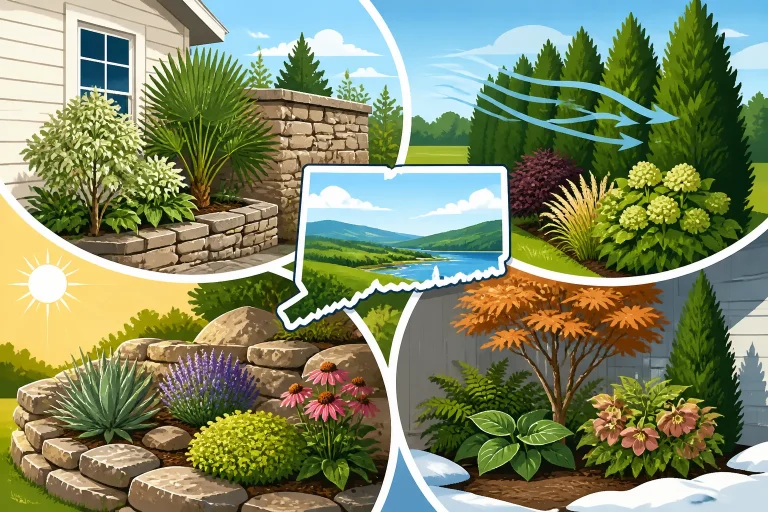
A zone map reduces complex weather patterns into broad areas. Real gardens have more detail than a map can show. Even within one ZIP code, a sunny, sheltered yard may experience different winter conditions from a low, open garden with a clear view of the sky.
Elevation, slope, and cold-air movement
Cold air can collect in low spots on calm nights, while a slope may allow it to drain away. A garden at the bottom of a dip may be more exposed to frost than a site higher on the same property. The effect depends on the terrain, nearby barriers, and weather conditions; it does not mean every hillside is warmer or every valley is colder in every situation.
Before planting a marginally hardy shrub or perennial, look at the ground around the planting site. Does the spot sit at the bottom of a slope? Is there a retaining wall or dense hedge that blocks air movement? Does cold air seem to settle there on clear nights? These observations can help you choose between a more protected bed and a more exposed one.
Wind and exposure
Winter wind can dry evergreen foliage and increase stress on stems and buds. A plant may be within its listed hardiness range yet still suffer in a windy, exposed location. A fence, wall, or group of established plants may offer some shelter, but a sheltered spot can also hold moisture or limit airflow. Consider the full set of conditions rather than assuming that any protected corner is automatically ideal.
Water, soil, and drainage
Cold tolerance is only part of a plant’s winter survival. Soil that stays waterlogged can damage roots, while a very dry site can stress plants going into winter. Some plants also have specific soil or moisture needs that a hardiness zone does not describe.
Check drainage before investing in a plant that is only marginally suited to your site. After rain, note whether water disappears reasonably well or remains standing. If a plant prefers well-drained soil, choose or prepare a site that meets that need rather than relying on a warmer zone label to overcome unsuitable conditions. For broader site planning, Essential Site Prep Steps Before Your First Connecticut Garden covers the practical checks that matter before planting.
Built-up areas and nearby water
Buildings, paved surfaces, walls, and other structures can affect local conditions by changing sun exposure, shelter, and how quickly surfaces warm or cool. A sheltered urban garden may differ from a nearby open plot. Coastal influence can also shape local conditions, but the effect is not uniform across every shoreline neighborhood or every yard.
These differences are reasons to inspect your site, not reasons to assign a new hardiness zone based on a single feature. A warm wall may help a plant in one winter and offer little protection during another. Keep the map’s zone as the broad reference and use repeated observations to judge whether a particular planting location is reliably sheltered.
For more on how small site differences affect plant choices, see Creating Garden Microclimates to Grow Borderline-Hardy Plants and Growing Marginally Hardy Plants in Sheltered Connecticut Microclimates. A microclimate can improve the odds for a plant near the edge of its range, but it cannot make winter risk disappear.
Use zones for perennials, not as a planting calendar
A common mistake is to treat a hardiness zone as if it gives a complete planting schedule. The map answers a narrower question: how cold a location tends to get in winter, on average, over the period used for the map. It does not tell you when a garden bed is ready for seed, when a tender plant can safely go outside, or when the first frost will arrive in a given year.
Match the zone to the plant’s listed range
When reading a plant label or catalog entry, look for its stated hardiness range and compare it with your map result. If the plant is rated for a colder range than the garden, winter survival may be more dependable, assuming the site also suits the plant’s light, soil, and moisture needs.
If your location is at the warmer edge of a plant’s listed range, winter injury may be more likely. If it is at the colder edge, the plant may survive some winters but be vulnerable to unusually severe conditions or an exposed planting site. Treat those edge cases as risk decisions, not as guarantees.
For a plant near the boundary, consider:
- Whether the plant is evergreen or loses its foliage in winter
- Whether it is newly planted or well established
- How exposed the planting spot is to wind
- Whether the soil drains well
- Whether the plant has additional summer or moisture requirements
- Whether losing the plant would be costly or disappointing
A plant’s rating should be considered alongside its specific needs. A shrub that is winter hardy in your zone can still fail in dense shade if it needs more sun, or decline in wet soil if it needs sharp drainage. Hardiness tells you about one important limitation; it does not replace the rest of the growing information.
Protect vulnerable plants thoughtfully
If you decide to try a plant close to its hardiness limit, choose the site carefully. A sheltered location with suitable soil may provide better odds than an exposed spot. Avoid placing a vulnerable plant where water collects or where winter wind repeatedly strips moisture from foliage.
Do not assume that a protective structure or a warm wall will make a plant reliably hardy. Shelter can help, but it may also change light, drainage, and airflow. Observe how the site behaves during cold and thawing periods, and be ready to adjust if the plant shows repeated winter damage.
For plants that are important to the garden, choose options that are comfortably suited to the site rather than depending on a marginal location. For experimental plantings, accept that the outcome is less certain and avoid placing the plant where failure would be difficult to replace.
Keep vegetable timing separate
Vegetable planting decisions need several kinds of information: frost risk, soil temperature, crop preferences, and the time a crop needs to mature. The hardiness zone alone does not provide those details. A crop that tolerates chilly spring conditions may be ready for outdoor planting while a warm-season crop still needs warmer soil and safer nights.
Use the planting calendar for the crop and the conditions in your garden, not just the zone. The state’s coastal and inland areas can differ in spring warming and frost timing, and individual sites can differ again. See How Connecticut Microclimates Shift Your Spring Planting Dates and When Coastal and Inland Connecticut Beds Warm for Spring Starts for the role local conditions play in spring planning.
Combine the map with frost, soil, and seasonal observations
A reliable Connecticut garden plan uses more than one reference. The hardiness zone helps screen perennial plants for winter suitability. Frost information helps you plan around the risk to tender crops. Soil conditions help you decide when to work and plant. Your own observations help refine all of those choices over time.
Frost dates are estimates, not appointments
A frost date is a probability-based estimate, not a fixed date that guarantees safe weather before or after it. Local topography, exposure, and the weather pattern in a particular season can shift frost risk. A garden in a low area may experience frost when a nearby elevated site does not, and a sheltered yard may warm differently from an open field.
Use frost information as a planning reference rather than a promise. Keep an eye on short-term forecasts when plants are vulnerable, and delay tender planting if conditions remain risky. For Connecticut-specific comparisons, Coastal Connecticut vs Litchfield Hills: Last Spring Frost Timing explains why broad regional timing can vary, while First Fall Frost Across Connecticut: Coast to Inland Timing helps frame autumn decisions.
Soil readiness matters as much as the calendar
A day that looks suitable on a calendar may still be too wet or cold for planting. Working wet soil can compact it, and seeds can struggle if the soil is not at a suitable temperature for that crop. Check the bed itself instead of assuming that the zone or the date tells the whole story.
A simple observation is to inspect the soil after rain. If it is sticky, clumps easily, or smears when handled, wait before cultivating. If it is workable and crumbles rather than packing into a dense mass, it may be in better condition for preparation. For more detail, see Checking Connecticut Soil Readiness Before Spring Garden Tillage.
Soil temperature is particularly important for warm-season crops. A location in a comparatively warm zone can still have chilly spring soil, especially in a shaded bed or a raised site exposed to cold wind. Conversely, a sheltered, sunny bed may warm earlier than a nearby open plot. Use crop-specific guidance and the actual bed conditions rather than treating a hardiness zone as a soil-temperature reading.
Track what happens in your own yard
A small garden record can make the map more useful. Note where frost appears first, which beds warm sooner, where snow lingers, and whether winter wind causes damage. Record the conditions near plants that survive well and those that struggle. Over time, these observations help you distinguish a broad regional pattern from a reliable feature of your own site.
A practical record might include:
- The approximate location of the bed and whether it is high, low, or sloped
- Sun and wind exposure
- Whether water drains quickly or remains after rain
- When a frost occurs in one part of the yard compared with another
- Winter damage to perennials, shrubs, or evergreen foliage
- Which areas warm earliest in spring
Do not use one unusual season as proof that a location has changed zones. The map summarizes long-term patterns, while a garden record helps you make choices within those patterns. Several seasons of observations are more useful than a single cold snap or mild winter.
Common mistakes when interpreting ZIP-code results
A zone lookup is simple, but the result is easy to overread. A few common assumptions can lead to disappointing plant choices or poorly timed vegetable planting.
Treating a ZIP code as a precise climate boundary
ZIP codes are useful search terms, but they are not climate units. A single ZIP code can cover a large area, and a result may represent a general location rather than the garden’s exact conditions. Zoom in on the map and check whether a zone boundary lies nearby.
If a map tool gives a different answer from a plant label or another website, first check whether both are using the same map and location. Then look at the actual map shading rather than relying only on the text result. The location’s position relative to the boundary may explain the disagreement.
Assuming every yard in a zone is interchangeable
Two gardens in the same zone can differ in exposure, drainage, shade, wind, and winter moisture. A plant may thrive in one and struggle in another. Use the zone as a filter, then evaluate the planting site.
This matters most when a plant is close to the limits of its listed hardiness. A sheltered garden with suitable soil may give it a better chance than an exposed, wet, or windy bed. A plant rated for a colder zone may still fail if its growing requirements are not met.
Using the zone to time all planting
The zone does not tell you when to start seeds indoors, direct-sow a crop, set out a transplant, or harvest. Those decisions depend on the crop, the season, and current conditions. A spring planting date also should not be confused with the annual minimum temperature used to define the hardiness zone.
Use a crop-specific calendar alongside local weather information. For example, cool-season vegetables and warm-season vegetables do not have the same temperature needs. A tomato transplant needs warmer conditions than a crop that tolerates cool spring weather. Safe Dates to Direct-Seed and Transplant Vegetables Outside offers a separate framework for those decisions.
Assuming a warmer zone guarantees an easier garden
A warmer zone may make some plants more likely to survive winter, but it does not eliminate spring cold, summer drought, heavy rain, pests, or disease. Garden success depends on matching a plant to the full site, not just to the winter minimum.
Likewise, a colder zone does not prevent gardeners from growing a wide range of annual crops. Many vegetables are planted for one season and can be selected and scheduled according to the local growing period. A perennial’s ability to survive winter and an annual crop’s ability to mature are different planning questions.
Forgetting that maps are revised
Hardiness maps are periodically updated as climate records and mapping methods change. Older references may show a different zone for the same general area. When a result matters for a long-lived planting, check the current USDA map and note the source instead of treating an old plant tag or web result as definitive.
A map revision does not mean your yard suddenly changed overnight. It means the map’s estimate of long-term patterns has been updated. Your own garden conditions still matter, especially near a zone boundary or in a strong microclimate.
A practical zone-checking routine for Connecticut gardeners
You do not need to make every garden decision from a map. A consistent routine can keep the zone in perspective and help you choose plants with fewer surprises.
- Look up the garden location on the USDA map. Search by ZIP code, then zoom in to the approximate location of the planting area.
- Note whether the location is close to a zone boundary. If it is, treat the map result as less decisive and avoid relying on a single lookup tool.
- Check the plant’s listed hardiness range. Compare the range with the map result, especially for trees, shrubs, and perennials that will stay outdoors year-round.
- Assess the exact planting site. Consider sun, wind, slope, drainage, and nearby structures. A suitable zone does not compensate for unsuitable growing conditions.
- Use separate timing information for vegetables. Check frost risk, soil temperature, crop requirements, and days to maturity rather than using the hardiness zone as a planting date.
- Watch the weather when conditions matter. Frost probabilities and seasonal averages help with planning, but current forecasts are important when plants are exposed to immediate risk.
- Keep notes and revise your choices. Track winter injury, frost pockets, and spring warming in different parts of the yard. Use that evidence to choose better sites and plants over time.
This routine is especially helpful when planning a mixed garden. A perennial border may need zone-aware plant selection, while a nearby vegetable bed needs crop-by-crop timing. Trees and shrubs need attention to mature size, soil, and exposure, while annual vegetables are often chosen for reliable harvest within the available growing season.
When you are uncertain about a plant, compare multiple factors instead of trying to make the map answer every question. A locally suitable plant with the right sun and drainage is often a more dependable choice than a marginal plant placed in a difficult site. For annual vegetables, prioritize the crop’s season length and temperature needs. For long-lived plants, give more weight to winter hardiness and site exposure.
The central takeaway is simple: use your ZIP code to find the general map area, then look beyond the ZIP code. The USDA hardiness zone helps estimate winter cold and screen plants for perennial survival. It does not replace an assessment of your yard, a frost-aware planting calendar, or observations of how your beds actually behave.
Frequently Asked Questions
Can I determine my exact Connecticut hardiness zone from my ZIP code?
A ZIP code can provide a useful starting point, but it may cover more than one local condition or sit near a zone boundary. Search the USDA map, zoom to the garden’s approximate location, and compare the map with the site’s terrain and exposure.
Does my hardiness zone tell me when to plant vegetables?
No. It helps assess the winter cold tolerance of perennial plants. Vegetable planting depends on the crop, frost risk, soil temperature, and growing-season needs. Use crop-specific timing guidance as well as local weather information.
If a plant is rated for my zone, will it definitely survive?
No. A compatible rating suggests that the plant may be capable of surviving the area’s typical winter minimum. Drainage, wind, exposure, soil, plant health, and unusually severe weather can still affect survival.
Why might two gardens in the same ZIP code have different results?
Yard conditions can vary with slope, elevation, shelter, wind, nearby structures, and drainage. A low, exposed garden may experience different cold or frost conditions from a sheltered site nearby, even when both share a ZIP code.
Disclaimer
This article is for general informational purposes only and does not constitute professional advice. Laws, prices and regulations vary by location and change over time. Consult a qualified professional for guidance on your specific situation. Connecticut Gardening Guide is not a government agency and is not affiliated with any university extension, state department of agriculture or other government agency.