Connecticut Planting Zones: How Location Shifts Transplant Timing
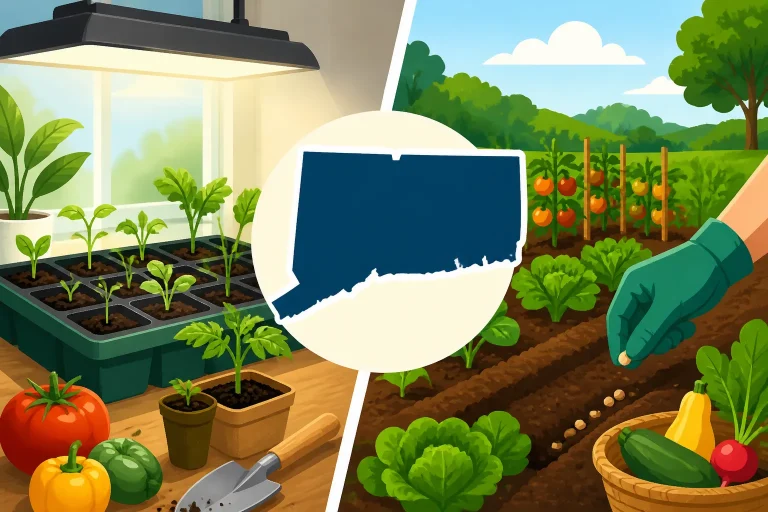
Connecticut gardeners can live in the same broad hardiness zone and still face different spring planting conditions. A coastal bed, an inland valley, and a sloped garden may warm and lose frost risk at different rates. This guide explains what planting zones can tell you, what they cannot, and how to use local conditions to time transplants more reliably.
What a planting zone can and cannot tell you
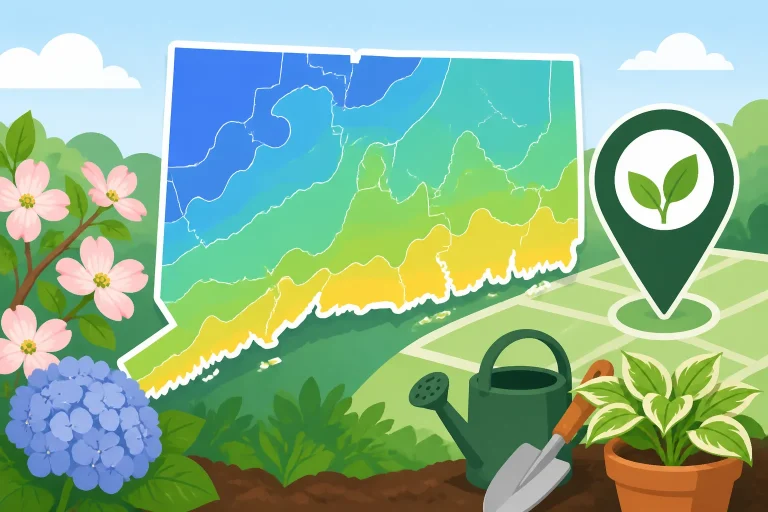
A plant hardiness zone is a useful starting point for choosing plants that can survive winter outdoors. It is based on the average annual extreme minimum winter temperature for an area. A plant labeled hardy in a particular zone may be able to withstand typical winter lows there, especially once established and growing in suitable conditions.
That information helps with decisions about perennial flowers, shrubs, trees, and other plants that remain in the ground through winter. It can also help you compare the general winter conditions of different parts of Connecticut. To check the zone associated with your area, use the current USDA Plant Hardiness Zone Map rather than relying on an older map or a general description of a town. ZIP codes or areas fall in a zone on the map, but a ZIP code is not precise enough to assign a zone to every garden within it. For more detail, see USDA Hardiness Zones Across Connecticut: Checking Your Local ZIP.
A hardiness zone is not a spring planting calendar. It does not tell you when the last frost will occur in your garden, when soil will be warm enough for tomatoes, or whether a young transplant can handle a cold, windy night. Two gardeners in the same zone can need different transplanting plans because their sites differ in elevation, exposure, soil, and shelter.
It is also important to separate winter survival from transplant success. A perennial may be hardy enough to survive winter but still be damaged if planted into saturated soil or exposed to harsh wind before it is established. A vegetable transplant may be grown indoors in a warm, stable environment and need protection from cold nights even when its mature plant could eventually grow well through summer.
| Planning question | What a hardiness zone helps answer | What you still need to check |
|---|---|---|
| Can a perennial potentially survive winter outdoors? | Whether typical winter minimums suit the plant | Drainage, exposure, snow cover, and the plant’s establishment |
| Is it safe to transplant vegetables outside? | Very little about the specific planting day | Frost risk, plant type, soil temperature, and forecast |
| Should I sow or transplant by a townwide date? | It gives broad climate context | Your garden’s elevation, slope, wind, and nearby buildings |
| Will a warm-season crop grow reliably? | It offers some background on regional conditions | Warm soil, a sufficiently long growing window, and crop maturity needs |
When you plan a vegetable garden, treat the zone as one layer of information among several. A planting decision is stronger when it combines the plant’s cold tolerance with the recent weather, the forecast, the condition of the bed, and the way the specific garden site behaves.
Why location shifts transplant timing across Connecticut
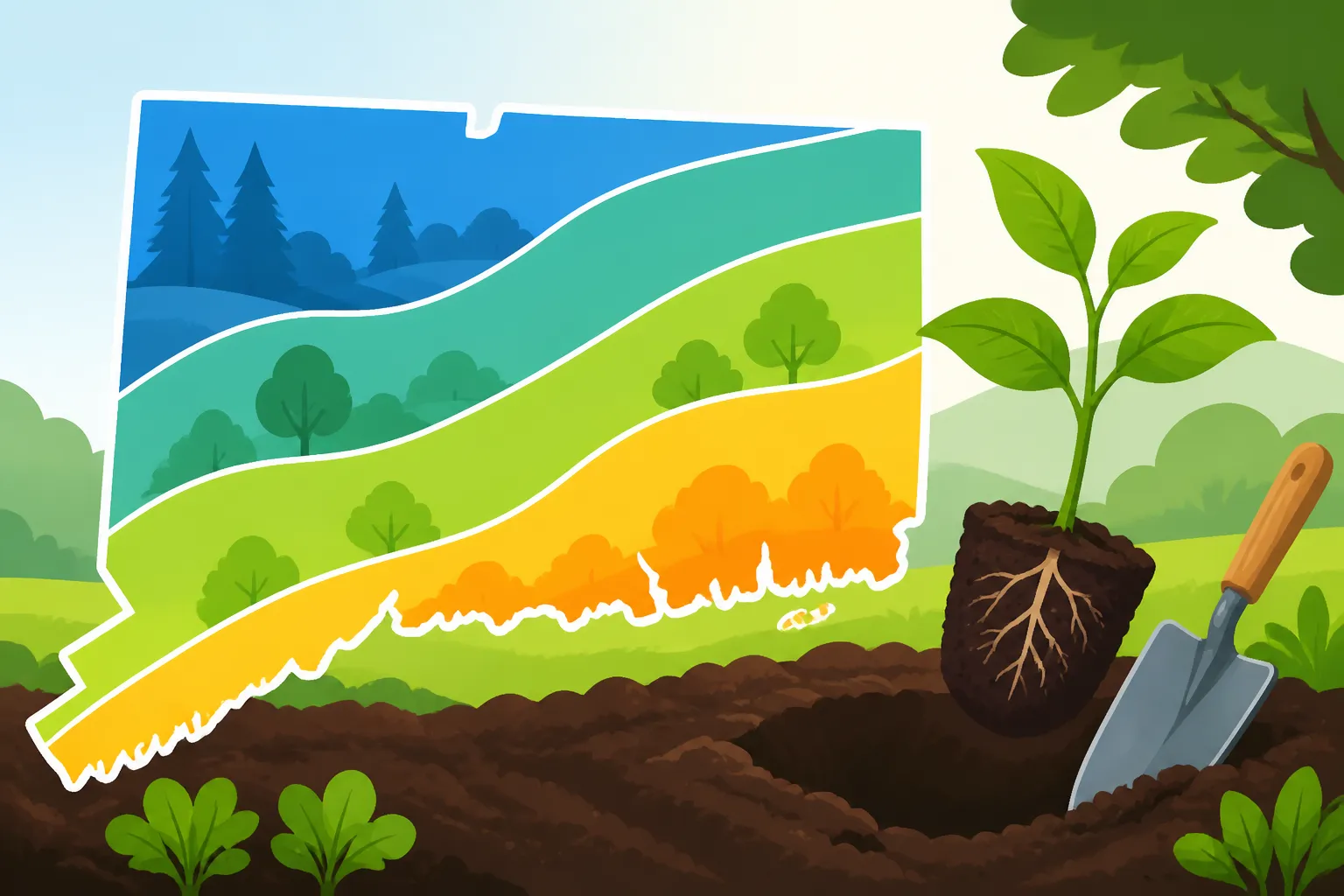
Connecticut is small enough that it can be tempting to use one planting schedule statewide. In practice, conditions change over short distances. The coast, inland valleys, wooded neighborhoods, exposed ridges, and sheltered yards do not necessarily experience the same spring weather at the same time.
The shoreline often has a different temperature pattern from inland areas because large bodies of water warm and cool more slowly than land. That influence can soften some temperature swings close to the coast, but a coastal garden may also face strong wind, salt exposure, or cool conditions that slow soil warming. Being near the water is not an automatic signal to plant early.
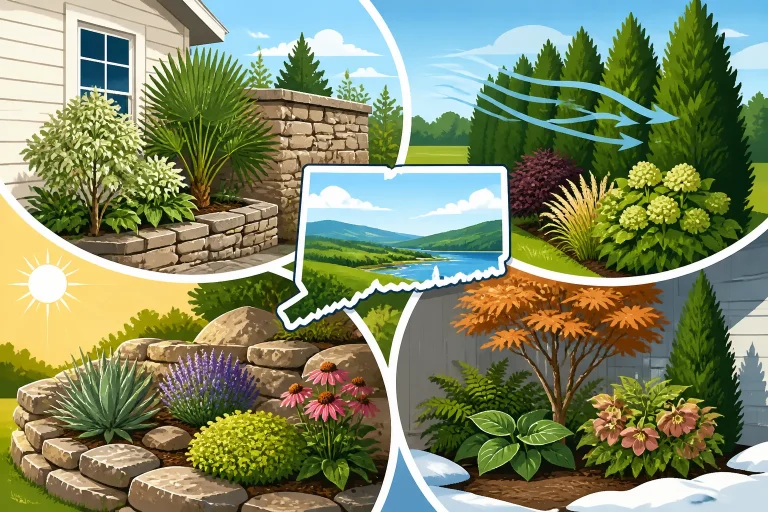
Inland gardens can warm quickly during a sunny spell, then cool sharply at night. Low areas and valleys may collect cold air, while a slope can drain that air away. Higher or more exposed sites may remain chilly and windy. A south-facing bed beside a building can warm sooner than a north-facing bed in open ground, but it may also heat and dry more quickly. Those differences can matter even between two gardens in the same neighborhood.
For a regional comparison, Coastal Connecticut vs Litchfield Hills: Last Spring Frost Timing explores how broad geography can shape frost timing. Think of that kind of comparison as context, not a promise for an individual yard. Frost dates are probabilities, not fixed days, and the date varies from year to year. A historical estimate can help you plan, but the actual weather in a particular spring may arrive earlier or later.
Your site may also contain several small climates. A fence, wall, hedge, patio, or evergreen screen can reduce wind and create shelter. A low spot can remain colder than the rest of the yard. A raised bed may drain and warm faster than heavy ground soil, but that does not make it immune to a cold night. A covered or protected growing area can behave differently from an open bed, too.
Before changing your planting schedule, observe the conditions where the transplants will actually grow. A simple garden log can help reveal patterns over time. Record when the soil becomes workable, when overnight lows threaten tender plants, and which parts of the garden stay wet or cold. Note the site features as well: sun exposure, slope, wind protection, nearby pavement, and whether the bed is raised or in-ground. These observations make general planting advice more useful without pretending that every garden in a town behaves the same way.
For a closer look at site-level effects, see How Connecticut Microclimates Shift Your Spring Planting Dates. The practical lesson is not to calculate a perfect date from a map. It is to use the map to understand the broad setting, then make the planting decision from the garden’s own conditions.
Match transplant timing to the crop
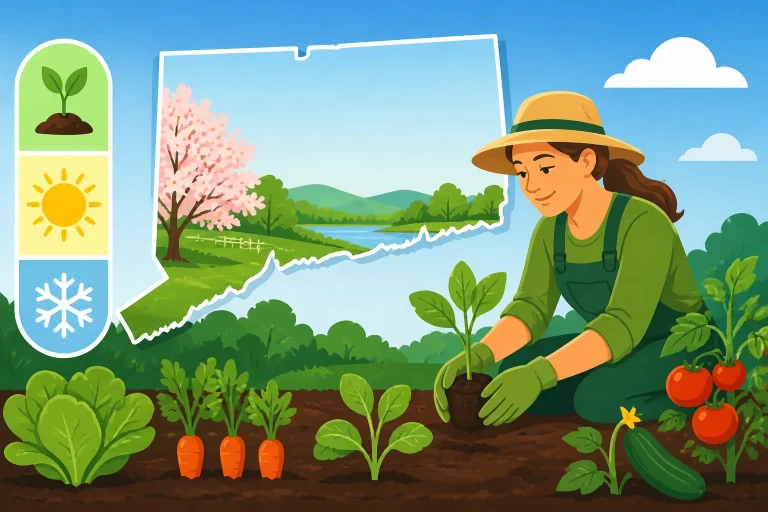
Different crops respond differently to cold, so there is no single transplant date that works for every vegetable. Some can tolerate cool air and soil once established. Others stall, suffer damage, or fail when exposed to chilly conditions. Warm-season crops generally need more protection and warmer soil than many cool-season crops.
Cool-season vegetables such as broccoli, cabbage, and lettuce can often be planted earlier than tender crops, provided the seedlings are healthy and the bed is workable. “Cool-season” does not mean immune to cold. A young plant recently moved from indoors may be more vulnerable than a well-established plant that has gradually adjusted to outdoor conditions. Wind, wet soil, and sudden cold can compound stress.
Peas and some leafy greens are frequently grown in cool weather, but the method matters. Seeds sown directly into garden soil experience outdoor conditions from the start. Transplants grown indoors have not yet developed the same outdoor tolerance. A cool-season transplant may be suitable for an early bed, but it still needs a careful transition and conditions that allow roots to settle.
Warm-season crops such as tomatoes and peppers need a more cautious approach. A transplant can look large and healthy while still being poorly suited to cold soil and cool nights. Tomatoes may tolerate a wider range of conditions than peppers, but both benefit from warmth and a gradual transition out of indoor growing conditions. For crop-specific considerations, see When to Transplant Tomatoes and Peppers into Warm Soil in Connecticut.
Cucumbers, squash, beans, and corn are also sensitive to chilly starts compared with cool-season crops. A seedling set into cold soil may pause rather than establish quickly. Direct-sowing is often an option for these crops, but the soil still needs to be warm enough for dependable germination. Starting a crop indoors does not remove the need for warm outdoor conditions; it simply changes the stage of the plant when you set it out.
The plant’s maturity and condition matter as much as its category. A compact, sturdy transplant with several healthy leaves is generally a better candidate than a tall, stretched seedling. Check for firm stems, healthy roots, and signs of stress or pests. If a root ball is very dry, water it before planting. If roots are tightly circling the container, handle the plant carefully and avoid leaving it confined for too long.
Seed packets and plant labels can provide useful details, including how long a crop typically takes to mature and whether it is suited to direct sowing or transplanting. Use these as planning information, not a guarantee. A packet from Botanical Interests, for example, can help you check the crop’s stated growing needs, but local soil and weather still determine whether a seedling is ready to go outdoors.
A useful way to organize your planting decisions is to group crops by risk:
- Cool-tolerant crops: Consider these earlier, after checking soil condition and preparing seedlings for outdoor exposure.
- Crops that dislike cold soil: Wait for the bed to warm, even if the daytime air feels pleasant.
- Frost-sensitive crops: Delay planting until frost risk is lower and the forecast supports a safe transition.
- Crops with a long growing period: Plan seed-starting and transplanting together so the crop has enough time to mature without rushing it into unfavorable conditions.
For statewide season guidance, compare this crop-by-crop approach with When to Plant Vegetables Outdoors in Connecticut. That page can help with broad planning, while your site observations and the plant’s needs should decide the final timing.
A practical method for choosing a transplant window
Instead of choosing one calendar day and treating it as a deadline, use a sequence of checks. This helps you respond to the season you are actually having rather than the season you expected.
-
Identify the crop’s cold tolerance. Decide whether it is a cool-season crop, a crop that needs warm soil, or a plant that is particularly vulnerable to frost. Check the seed packet or nursery label for information about sowing, transplanting, maturity, and growing conditions.
-
Use a local frost estimate as a planning reference. Historical frost information can suggest when risk is usually lower, but it does not predict the weather in your yard. Use a source that describes the probability and the weather station or period behind the estimate, where that information is available. Do not treat any average date as a guarantee.
-
Check the near-term forecast. Look at overnight lows and possible frost, not just daytime highs. A string of pleasant afternoons does not erase the risk from a cold night. If conditions look uncertain, wait, protect the plants, or use a more sheltered location.
-
Assess the bed itself. Soil should be workable rather than waterlogged or compacted. A bed that smears, clumps heavily, or holds standing water is not ready for transplanting simply because the calendar says it is time. Checking Connecticut Soil Readiness Before Spring Garden Tillage offers more on judging soil conditions.
-
Measure or otherwise assess soil warmth when crop sensitivity makes it important. Warm-season crops are particularly dependent on warm soil for root growth. A sunny afternoon can warm the surface while deeper soil remains cool. Check at a consistent depth appropriate to the crop and use the crop’s instructions to interpret the result rather than guessing from air temperature.
-
Harden off indoor-grown seedlings. Gradually expose them to outdoor light, wind, and temperature changes before planting. See Setting Out Starts to Harden Off Before Connecticut Planting. A sudden move from a protected indoor setup into direct sun and wind can cause stress even when frost is not forecast.
-
Plant during a favorable stretch, not just on a favorable afternoon. A calm, cloudy day can reduce transplant stress, but the days after planting matter too. Avoid setting plants out immediately before a cold front, heavy rain, or strong wind if you can wait for a better window.
-
Keep a backup plan. Be ready to cover or move vulnerable plants if conditions change. If frost is forecast, use suitable protection and remove or adjust it as conditions require, taking care not to trap heat or damage foliage. If the forecast is uncertain and plants are still in containers, delaying a few days may be the simplest choice.
These checks work together. A transplant can be hardened off but still go into soil that is too cold. A bed can be warm but still be exposed to a frost that threatens a tender crop. The best planting window is the period when the plant, soil, weather, and site all line up well enough for the plant to establish.
There is no need to wait for perfect conditions for every crop. Cool-tolerant vegetables can often handle more variation than tender ones. But it helps to know which risk you are accepting. Planting earlier may bring an earlier harvest, but it can also mean slower growth, extra protection, or replacing damaged plants. Waiting can reduce stress but leave less time for a long-season crop to mature. The right trade-off depends on the crop and how much risk you are willing to manage.
Build a flexible calendar for your own garden
A garden calendar is most useful when it has windows and checkpoints rather than a single “plant everything” day. Start with broad seasonal phases, then revise the plan using local conditions.
| Season phase | What to watch | Typical planning focus |
|---|---|---|
| Early spring | Soil workability, wet ground, cold nights | Prepare beds when soil is ready; plan cool-season sowing and transplants |
| Mid-spring | Frost risk, changing overnight lows, soil warming | Continue cool-season planting; begin checking conditions for less cold-tolerant crops |
| Late spring | Warmth of the bed, forecast, seedling readiness | Consider warm-season transplants only when their conditions are suitable |
| Summer | Heat, moisture, and time remaining for crops to mature | Maintain established plants and plan fall crops based on their maturity needs |
| Late summer into fall | Shortening days, expected cold, crop maturity | Choose crops and planting windows that can finish before cold limits growth |
The phases do not correspond to exact dates, and they will shift by location and year. Use them to organize decisions rather than to impose a schedule. A coastal gardener may find one part of the plan moves differently from an inland gardener’s. A sheltered bed may be ready before a windy, exposed plot nearby. The same garden can also have an early-warming corner and a cold pocket.
Work backward from the harvest you want. If a crop needs a long time to mature, estimate when it should begin growing and whether your local conditions are likely to support that schedule. If it is a short-season crop, you may have more flexibility. Check the days-to-maturity information on the seed packet, while remembering that it is an estimate under growing conditions that may differ from your garden. Checking Days to Maturity for Reliable Connecticut Harvests can help you use that information in planning.
It can also help to separate seed-starting dates from transplant dates. Indoor seedlings need time to grow and harden off before they go into the garden. Starting too early can leave you with crowded, overgrown plants waiting for a safe outdoor window. Starting too late can delay harvest. A flexible start schedule should account for the crop’s growth rate, the indoor conditions available, and the outdoor planting conditions. See Connecticut Indoor Seed Starting and Outdoor Vegetable Sowing Dates for a broader schedule to adapt to your site.
Keep a simple record with the crop, variety, location in the garden, sowing or transplant date, weather conditions, and outcome. Make notes if a bed was especially cold or if a wall provided useful shelter. Over several seasons, the record can show whether a planting window consistently works for your site. It can also help distinguish a timing problem from another issue, such as poor drainage, inadequate light, or transplant stress.
If you garden in containers, treat them as their own microclimate. Pots may warm more quickly than in-ground soil in sunshine, but they can also cool quickly at night and dry out faster. Place containers where you can monitor them and move them if needed. A patio that feels warm to people may still expose plants to cold air or wind.
For crops that can be sown directly, transplant timing is only part of the plan. Direct-sown plants avoid the indoor-to-outdoor transition but depend on suitable soil and germination conditions. Compare the options in Safe Dates to Direct-Seed and Transplant Vegetables Outside, then choose based on crop, seedling availability, and the conditions in your bed.
Common timing mistakes and how to avoid them
Treating a zone or town as a planting date
A zone describes winter temperature patterns, not the frost risk on a particular spring night. A townwide schedule cannot account for a low-lying yard, a sheltered slope, or a bed beside a warm wall. Use zone information to understand broad climate suitability, then check the conditions where the plant will grow.
Relying on daytime warmth
A sunny day can feel like the start of spring while overnight temperatures remain unsuitable for tender crops. Check the forecast for nighttime conditions. For warm-season plants, also consider soil temperature and how quickly the bed loses heat after sunset.
Planting into wet soil because the calendar says it is time
Cold, wet soil can slow root establishment and make bed preparation damaging. If soil sticks to tools and compresses into dense clods, wait for it to drain and become workable. Avoid trying to solve a timing problem by repeatedly tilling or walking on wet ground.
Assuming a large seedling is ready
A plant that has spent too long indoors may be leggy, root-bound, or unaccustomed to wind and direct sun. Size alone does not prove readiness. Check overall health, root condition, and whether the seedling has been hardened off. A younger, sturdier plant may establish more easily than an oversized one.
Moving every crop at once
Different vegetables have different tolerances, and a single transplant weekend may be too early for some and unnecessarily late for others. Separate the planting plan into crop groups. Start with the plants that can handle cooler conditions, then wait for warmer soil and lower frost risk before moving tender crops.
Forgetting that forecasts change
A forecast is a planning aid, not a guarantee. Conditions can shift after transplanting. Keep lightweight protection available when cold weather is possible, and be prepared to postpone planting if the plants are still easy to shelter in containers. Avoid leaving covers in place without checking how they affect the plants as conditions change.
Overlooking wind and exposure
A site can avoid frost and still be difficult for new transplants if it is windy, dry, or exposed to direct afternoon sun. Newly moved plants have to establish roots while adjusting to their surroundings. A less exposed spot, temporary protection, or a gradual transition may reduce stress.
Planning only for the first planting
A successful spring calendar does not end when the last transplant goes into the ground. Keep track of harvest timing and consider whether a crop can be planted again later. Succession sowing, fall crops, and short-season varieties can make better use of the growing period, but they still depend on local timing and the crop’s maturity needs.
A good transplant decision is a balance, not a race. Planting early can be worthwhile when you have a cold-tolerant crop, a prepared bed, and a way to manage unexpected weather. Waiting makes sense when the crop is tender, the soil remains cold or wet, or the forecast brings a clear risk. A flexible plan gives you room to make either choice for a reason.
Frequently Asked Questions
Does my Connecticut hardiness zone tell me when to transplant vegetables?
No. A hardiness zone helps describe winter minimum temperatures and plant survival potential. Vegetable transplant timing depends more directly on frost risk, soil warmth, crop tolerance, seedling readiness, and garden location.
Should coastal gardeners always plant earlier?
No. Coastal conditions can differ from inland conditions, but wind, cool soil, exposure, and the specific site all matter. Use local frost information and current forecasts, then assess the actual bed and crop before planting.
Can I transplant as soon as the last expected frost date passes?
Not automatically. Frost dates are probabilities, not fixed guarantees, and warm-season crops may need warmer soil and nights than a frost-free forecast alone provides. Check the crop’s needs and conditions after the estimated date.
What is the best way to plan for a garden with several microclimates?
Make separate notes for the different beds or corners. Track their sun, slope, wind exposure, drainage, and how they respond to cold nights. Use those observations to adjust planting windows rather than applying one date to the entire yard.
Disclaimer
This article is for general informational purposes only and does not constitute professional advice. Laws, prices and regulations vary by location and change over time. Consult a qualified professional for guidance on your specific situation. Connecticut Gardening Guide is not a government agency and is not affiliated with any university extension, state department of agriculture or other government agency.