Connecticut Indoor Seed Starting and Outdoor Vegetable Sowing Dates
Connecticut’s short, changeable spring can make it hard to know whether to sow seeds indoors, plant them outside, or wait for warmer soil. The best schedule depends on where you garden, what you are growing, and the weather that year. Use these indoor and outdoor sowing windows as a flexible plan, then adjust for local conditions.
Plan around your garden, not just the calendar
A statewide date can be a useful reminder, but it cannot account for every Connecticut garden. Coastal locations, inland valleys, higher elevations, and sheltered yards warm at different rates. Even within one town, a sunny raised bed may be ready before a damp, shaded plot.
Spring frost is one concern, but it is not the only one. Cool soil can slow germination or cause seed to rot, and cold nights can stress warm-season transplants even after the most serious frost risk has passed. For planning, think in terms of three signals:
- Frost risk: Is a cold night still likely to damage tender growth?
- Soil condition: Is the ground workable, and is the temperature appropriate for the crop?
- Plant readiness: Is a seedling sturdy enough to handle outdoor conditions?
These signals matter more than a date printed on a calendar. Frost dates are estimates, not guarantees, and the weather can vary from year to year. A cool, wet spring may delay outdoor sowing, while a stretch of mild weather can bring earlier opportunities. Keep a local forecast in view, but avoid treating one warm afternoon as proof that spring has arrived.
Connecticut gardeners often benefit from planning in waves. Sow cold-tolerant crops first, follow with crops that handle mild conditions, and wait for warmer soil before planting tender vegetables. For a broader look at how location changes the schedule, see Connecticut Planting Zones: How Location Shifts Transplant Timing and How Connecticut Microclimates Shift Your Spring Planting Dates.
| Garden situation | What it can mean for planting |
|---|---|
| Coastal or sheltered bed | Soil and air may warm earlier, but cold snaps can still occur |
| Inland valley or exposed yard | Nights may remain chilly longer; delay tender crops when needed |
| Higher elevation or cold pocket | Expect spring conditions to lag behind nearby warm sites |
| Sunny raised bed | May warm sooner than nearby ground, but can also dry faster |
| Shaded or wet soil | Often warms slowly; wait until it is workable rather than digging into mud |
The table is a way to think about timing, not a fixed ranking for every property. A sheltered inland garden may warm before an exposed coastal site, and a raised bed is not automatically ready if its soil is saturated. Check your own conditions before sowing or transplanting.
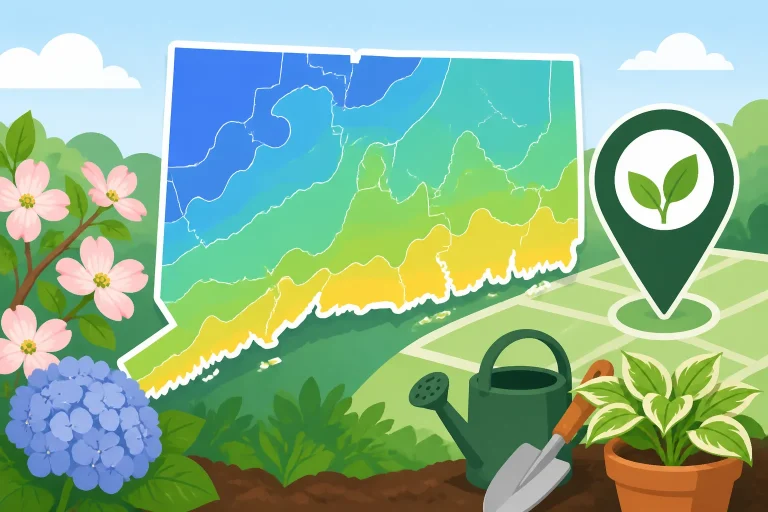
If you want a location-based starting point, USDA Hardiness Zones Across Connecticut: Checking Your Local ZIP explains how to look up a zone. Hardiness zones describe winter temperature patterns and help with perennial plant selection; they do not tell you when a vegetable bed is warm enough for spring planting. For vegetable timing, local frost patterns, soil warmth, and the crop’s tolerance are more useful.
Indoor seed starting dates for Connecticut vegetables
Starting seeds indoors gives slow-growing crops a head start and lets you choose from more varieties than a local nursery may carry. It also adds work: seedlings need suitable light, consistent moisture, room to grow, and a gradual transition outdoors. Starting too early can leave you with tall, crowded plants that are difficult to manage while outdoor conditions remain unsuitable.
A practical way to set an indoor sowing date is to work backward from the time you expect to transplant a crop. Use the seed packet’s recommended indoor-starting interval as a guide, then adjust for your local conditions. Avoid sowing every crop on the same day.
| Crop group | Approximate indoor-starting approach | Outdoor destination |
|---|---|---|
| Onions and leeks | Start early enough to grow steadily before spring planting | Cool-season bed when soil is workable |
| Broccoli, cabbage, and cauliflower | Start several weeks before the likely transplant window | Outdoor bed in cool spring conditions |
| Lettuce and other leafy greens | Start in small batches for flexible planting | Early spring bed or containers |
| Tomatoes | Start about six to eight weeks before the expected transplant date | Warm-season bed after conditions settle |
| Peppers and eggplant | Start earlier than tomatoes because they grow slowly | Warm, sheltered bed after cold nights ease |
| Cucumbers, squash, and melons | Start only a few weeks before outdoor planting | Warm soil after frost risk has eased |
These are planning intervals, not deadlines. Check the packet for crop-specific directions, including whether the seeds need light to germinate, how deep to sow, and how long seedlings should grow before transplanting. Seed packets from Botanical Interests, like other reputable seed packets, can help you confirm those crop-specific instructions. Do not assume every variety in a crop group has the same schedule.
Start only what you can support
Before sowing, make sure you have enough bright light and space for the seedlings as they grow. A sunny windowsill may be enough for a small batch, but indoor light is often weaker than it appears. Seedlings that lean, stretch, or develop long, weak stems may not have enough light. If you start more plants than you can keep under good conditions, the result is often a crowded tray rather than an earlier harvest.
Use clean containers with drainage and a seed-starting medium that holds moisture without staying waterlogged. Keep the medium evenly moist, not saturated. Once seedlings emerge, remove any cover used to retain moisture and provide good air movement. Follow the packet’s guidance on temperature and light; different vegetables have different germination needs.
If you are new to starting seeds indoors, Connecticut Indoor Seed Starting Timelines for the Connecticut Vegetable Garden and Starting Seed Trays and Potting Media for Connecticut Spring Crops can help you plan equipment and sowing batches. For the general process, see When to Plant Seeds and Starts: A Connecticut Beginner Guide.
Match the seedling to the outdoor window
A seedling is not ready to transplant simply because it has reached a certain age. It should be sturdy, actively growing, and appropriate in size for its container. Roots circling tightly around the pot, crowded leaves, or a plant that wilts quickly can signal that it needs attention before going outdoors.
At the same time, a large, mature seedling is not necessarily better. A plant held indoors too long can become root-bound and stressed. If outdoor conditions are delayed, move it to a larger container when needed, keep it in strong light, and avoid overfeeding in an attempt to force growth.
Outdoor vegetable sowing dates by crop and season
Direct sowing means placing seed in the garden bed where the crop will grow. It works especially well for vegetables that germinate quickly, dislike root disturbance, or grow best in cool weather. The right outdoor window depends on both the crop and the soil: some seeds tolerate cool conditions, while others need warmth to germinate reliably.
A useful sequence for Connecticut is to sow hardy, cool-season crops first; plant additional cool-season crops as spring progresses; then move to tender crops when the soil and nighttime conditions are warm enough.
| Crop or crop group | Typical Connecticut outdoor window | What to check |
|---|---|---|
| Peas, spinach, and radishes | Early spring, as soil becomes workable | Avoid sowing into saturated soil; protect seedlings from severe cold |
| Lettuce and other leafy greens | Early to mid-spring, then again for later harvests | Sow small batches; warm weather can shorten the harvest window |
| Carrots, beets, and turnips | Spring once the bed is workable; repeat later if desired | Keep the seedbed moist while seeds germinate |
| Beans | Late spring into early summer, after soil warms | Cold, wet soil can cause poor germination |
| Sweet corn | Late spring into early summer, once soil is warm enough | Plant in a suitable block rather than a single isolated row |
| Cucumbers and summer squash | Late spring or early summer, after cold conditions ease | These crops dislike cold soil and are often more successful in warm beds |
| Winter squash and pumpkins | Late spring or early summer, with room for vines | Check days to maturity and available space |
| Fall greens and root crops | Later summer, with timing based on the first autumn frost risk | Sow early enough for crops to mature before growth slows |
Use these as broad windows rather than universal dates. A seed packet may recommend soil warmth, direct sowing depth, or spacing that is more useful than a calendar month. If conditions remain cold or the bed is wet, waiting can improve results. If the soil is dry and workable and a crop tolerates cool conditions, an earlier sowing may be reasonable.
For vegetables commonly sown directly in spring, Direct-Sowing Peas, Radishes, and Lettuce Mix in Connecticut offers crop-specific guidance. For beans, corn, and other warm-season crops, Which Crops Are Easiest to Direct-Sow in Connecticut Gardens? can help you decide what to sow directly and what to start indoors.
Sow in small batches
A whole row of lettuce or radishes can mature at once, which may be more than a household can use. Instead, sow a modest amount, then repeat the sowing after a short interval while the weather suits the crop. This approach, often called succession sowing, spreads the harvest and reduces waste.
It works best when you leave enough room for later sowings and keep notes on what germinated. If a batch fails because the soil was too cold or dried out, you can adjust the next attempt. Staggered Spring Sowing: Seeding Connecticut Greens Every Two Weeks explains how to use repeat sowing for greens.
Leave room for a fall garden
Spring is not the only time to sow vegetables outdoors. Some crops grow well as summer begins and mature as autumn approaches, while others prefer the cooler stretch at the end of the season. Plan backward from the expected harvest period and the crop’s days to maturity, allowing for slower growth as days shorten and temperatures fall. The maturity estimate on a packet is a guide, not a guarantee.
For late-season planning, see Connecticut Fall Garden Planting Guide: Crops to Sow for Late Harvest and Outdoor Seed Sowing Windows for Connecticut Vegetable Beds. If a crop must reach a certain size before a hard freeze, do not wait until autumn feels cool to start it.
When to transplant seedlings outdoors
Transplanting is the handoff between indoor growing and the garden. A date alone cannot tell you whether that handoff will go well. The crop must be ready, the soil must suit it, and the plant needs time to adjust to direct sun, wind, and outdoor temperature swings.
Cool-season transplants such as broccoli, cabbage, and lettuce can usually go out earlier than tomatoes, peppers, and eggplant. Warm-season vegetables are vulnerable to chilly nights and cold soil. Even if a brief forecast looks mild, keep an eye on the coming nights and be prepared to protect tender plants or wait.
Harden off seedlings
Indoor seedlings have been sheltered from direct sun, wind, and fluctuating temperatures. Moving them straight from a grow light or windowsill to the garden can cause stress, even if the weather seems pleasant. Harden them off gradually over several days, increasing their outdoor exposure step by step. Begin in a protected spot and avoid exposing delicate seedlings to harsh midday sun or strong wind at first.
Bring plants back indoors or protect them if conditions turn cold, windy, or severe. Water seedlings as needed, but do not leave them sitting in water. A healthy transplant should be firm and hydrated, not wilted from a sudden change in conditions. For more detail, see Setting Out Starts to Harden Off Before Connecticut Planting and Hardening Off Seedlings Before Planting in Connecticut.
Check the bed before planting
Soil that is too wet is easily compacted when dug or walked on. If a handful of soil squeezes into a sticky mass, wait until it dries enough to crumble rather than smearing. Working wet soil can damage its structure and leave clods that are hard for young roots to penetrate. Checking Connecticut Soil Readiness Before Spring Garden Tillage covers this decision in more detail.
Before transplanting, clear weeds, water the seedlings, and set them at the depth recommended for the crop. Follow spacing directions so plants have room for airflow and mature growth. Water after planting to settle soil around the roots, then check the bed regularly while roots establish. Do not assume that spring rain will provide enough moisture; exposed beds and containers can dry quickly.
Warm-season plants need extra patience. Tomatoes may tolerate cooler conditions better than peppers, eggplant, cucumbers, and melons, but all can be set back by cold weather. To plan for those crops, see When to Transplant Tomatoes and Peppers into Warm Soil in Connecticut and Will Chilly Connecticut Spring Nights Harm Cucumbers?.
A flexible month-by-month planning rhythm
A monthly checklist can help you organize seed purchases and indoor space, but it should not override weather and soil conditions. Treat the sequence below as a planning rhythm that shifts with the year and with your location.
Late winter
Review the crops you want to grow and sort them into cool-season and warm-season groups. Check seed packets for indoor-starting guidance and days to maturity. Start slow-growing crops indoors when their recommended lead time makes sense for your expected planting window. Avoid starting everything at once; seedlings need light and space as they grow.
If you are buying seed, choose varieties that fit the space and the length of your growing season. A crop with a long maturity period may be a poor fit if the garden has a short window or limited room. Checking Days to Maturity for Reliable Connecticut Harvests explains what the number can and cannot tell you.
Early spring
Watch the bed rather than relying only on a date. When soil is workable, cold-tolerant vegetables can begin going outdoors or being direct-sown, depending on the crop. Keep row covers or other suitable protection available if a cold spell is forecast, and remove or adjust covers as conditions change so plants do not overheat.
Continue indoor sowing in batches that match the expected transplant window. If seedlings are growing faster than the garden is warming, provide adequate light and room rather than pushing them outdoors into unsuitable conditions.
Mid to late spring
As the garden warms, transplant cool-season starts and continue direct-sowing crops that tolerate spring conditions. Begin hardening off seedlings that are close to planting size. Check the forecast for cold nights, but remember that a warm day does not guarantee a warm bed.
Toward the end of spring, prepare for warm-season crops. Sow or transplant them only when conditions suit the crop. For a more detailed sequence, Connecticut Spring Sowing Schedule for Garden Seedlings can help coordinate indoor and outdoor work.
Early summer
Finish planting warm-season crops if the growing window allows, and keep the soil evenly moist while seeds germinate and young plants establish. Start thinking about fall crops before the spring garden is finished. Some vegetables for autumn harvest need to be sown or started well before the weather turns cool.
If a spring crop has bolted, struggled, or finished producing, remove it when practical and use the open bed for another crop. Avoid assuming that every spring vegetable can be replanted successfully during summer heat. Choose crops suited to the conditions and the time remaining.
Late summer and autumn
Use the crop’s maturity estimate, the local forecast, and the likely end of productive growth to decide what can still be planted. Keep newly sown beds moist through germination, especially in hot or dry weather. As frost becomes more likely, protect crops that can tolerate cool weather and harvest tender vegetables before damaging cold arrives.
For harvest and protection planning, see Protecting Connecticut Gardens When Autumn First Frost Is Forecast and Cold-Hardy Vegetables That Keep Growing Through Connecticut Frosts. The aim is not to hit a perfect date; it is to give each crop enough suitable growing time.
Common timing mistakes and how to avoid them
The most frustrating planting problems often come from doing the right task at the wrong time. A few adjustments can prevent wasted seed, stressed transplants, and crowded indoor trays.
Starting seeds too early
Early sowing can feel like progress, but seedlings that outgrow their containers before the garden is ready may become difficult to manage. They can stretch toward light, tangle together, or become root-bound. Start with the packet’s recommended lead time and count backward from a realistic transplant window for your garden. If you are uncertain, sow a smaller first batch rather than filling every tray.
Planting by a neighbor’s calendar
A neighbor may have a warmer site, different crops, or a garden that is more protected from wind. Their planting date can be a useful clue, but it is not a substitute for checking your own soil and forecast. Use local advice as one input, then adjust to your bed.
Treating a warm spell as a new season
A few mild days can encourage growth without warming the soil deeply. Tender crops may still face cold nights, and seeds in cool ground may germinate unevenly. Wait for conditions that suit the crop rather than responding to one sunny afternoon.
Forgetting seedling hardening
A sturdy indoor plant can still be damaged by sudden exposure to sun and wind. Give seedlings a gradual transition and watch them for signs of stress. If they wilt or scorch, reduce exposure and let them recover before increasing time outdoors again.
Sowing too much at once
Large plantings can produce a harvest that arrives all at once. Sow smaller amounts, repeat appropriate crops in batches, and leave room for later plantings. For crops with a short harvest period, staggered sowing is often more useful than planting a full row on the first suitable day.
Ignoring the seed packet
General calendars cannot account for every variety. Packets may specify whether seed should be started indoors or sown directly, how deep to plant it, and how long it takes to mature. Use those directions alongside local conditions. Botanical Interests and other seed suppliers provide crop- and variety-specific packet information; use it to refine the broad windows in this schedule.
Keeping no records
A simple garden notebook can make next spring’s decisions easier. Record the sowing date, where the crop was planted, when it emerged, and whether the bed was unusually cold, wet, or dry. Note what succeeded and what struggled. Over time, these observations help you adapt a general Connecticut schedule to your own property.
Frequently Asked Questions
Can I use one planting calendar for all of Connecticut?
Use a statewide calendar as a starting point, not a strict schedule. Coastal, inland, elevated, exposed, and sheltered gardens can have different spring conditions. Check your own soil and forecast, and adjust the timing by crop.
Should I start every vegetable indoors?
No. Some vegetables are easy to direct-sow outdoors, while others benefit from an indoor head start. Root crops such as carrots are generally sown where they will grow because transplanting can disturb their roots. Follow the crop’s seed-packet instructions.
How do I know when soil is ready for outdoor sowing?
The bed should be workable rather than saturated, and the crop should tolerate the soil conditions. If soil sticks together and smears when handled, wait for it to dry. For warm-season crops, check that the soil is warm enough for reliable germination.
Is a seedling ready to transplant as soon as it reaches the recommended age?
Age is only one guide. Look for a healthy, sturdy plant of suitable size, and make sure outdoor conditions are appropriate. Harden it off gradually before transplanting.
What if I miss the recommended spring window?
Choose a crop that can mature within the remaining growing time, check its days to maturity, and consider a later planting for fall harvest. If the season is too short for a particular crop, it may be more reliable to grow it next year or choose a faster-maturing option.
Disclaimer
This article is for general informational purposes only and does not constitute professional advice. Laws, prices and regulations vary by location and change over time. Consult a qualified professional for guidance on your specific situation. Connecticut Gardening Guide is not a government agency and is not affiliated with any university extension, state department of agriculture or other government agency.